Glucoamylase in Baking and Flour-Based Foods
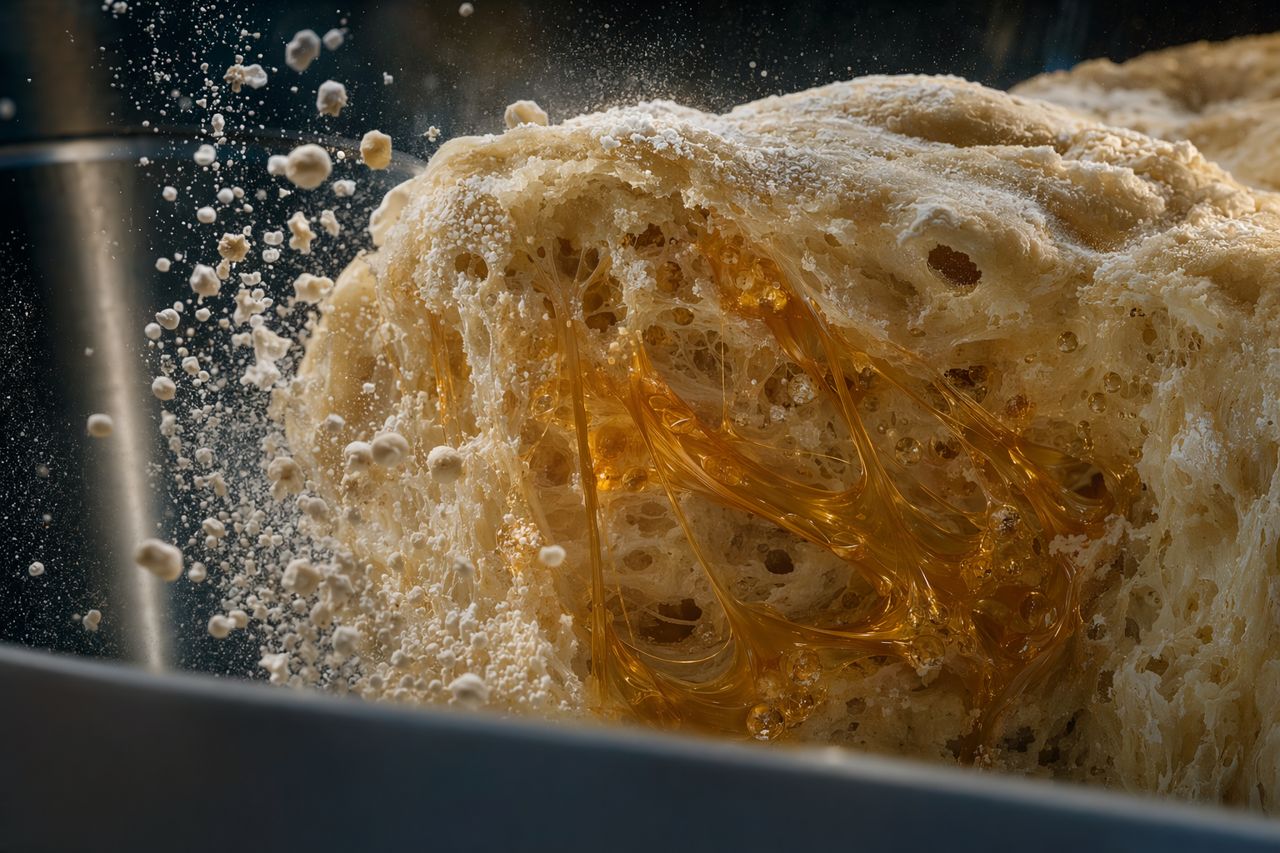
Glucoamylase, also known as amyloglucosidase or glucan 1,4-alpha-glucosidase, converts starch-derived dextrins into glucose from the non-reducing ends of carbohydrate chains. In baking, that matters because glucose is immediately useful: it supports yeast activity, contributes to crust color, and helps standardize performance when flour quality shifts from lot to lot.
Glucoamylase is specified for industrial bakery systems where fermentation control, surface color, and process repeatability are commercial requirements—not laboratory talking points.
Why bakeries use glucoamylase
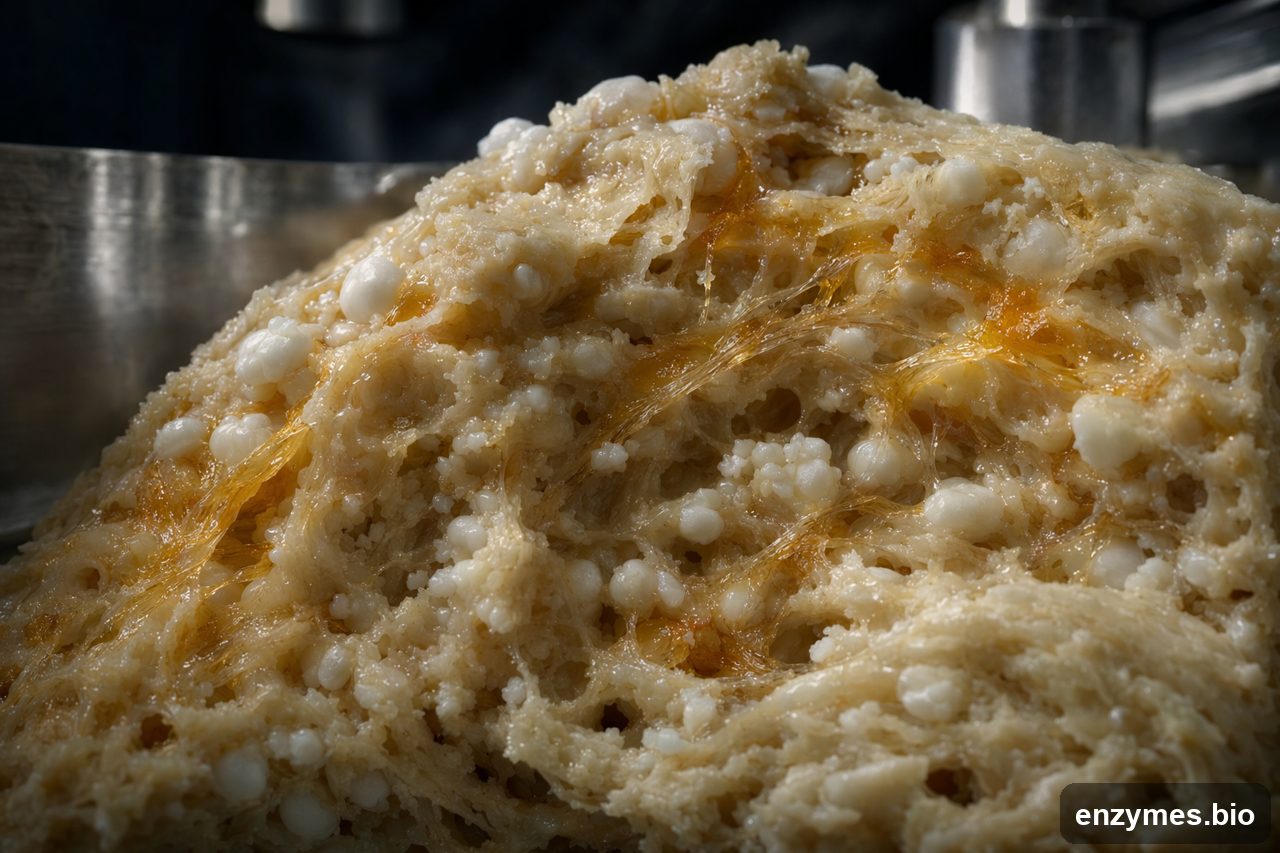
Flour naturally contains starch, but yeast cannot directly ferment intact starch granules. In dough systems, damaged starch and dextrins become available during mixing, resting, proofing, and heating. Glucoamylase works on these accessible starch fragments to release glucose steadily through the process.
Practical outcomes in dough processing
- Improved fermentable sugar availability for yeast-driven systems
- More consistent proof response when flour variation affects sugar release
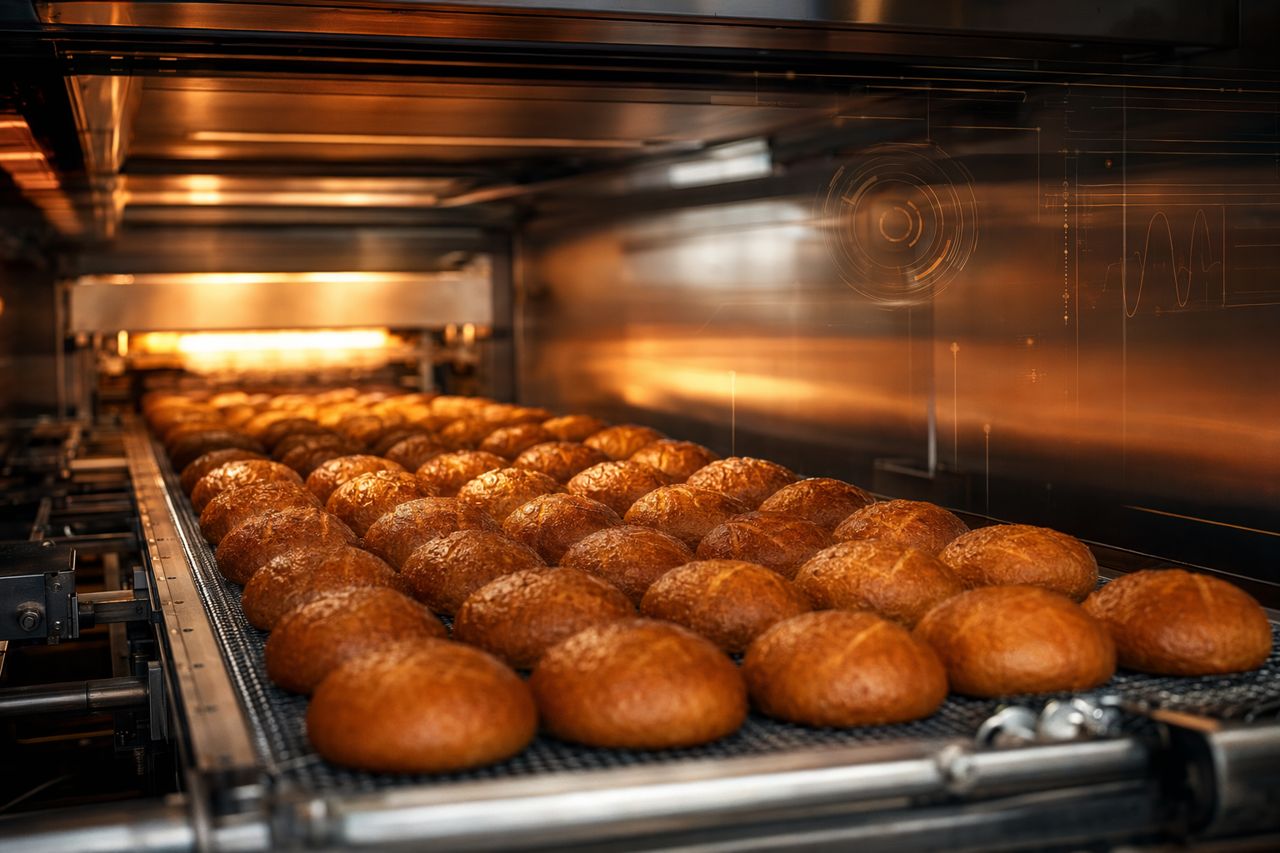
- Enhanced browning potential through increased reducing sugar contribution
- Cleaner flavor development in fermented breads, buns, and laminated bases
- Better process tolerance in continuous or high-throughput bakery operations
- Reduced dependence on added sugars in selected formulations, where product standards allow
Application areas
Pan bread, buns, and rolls
Glucoamylase supports yeast nutrition during fermentation and can help maintain a more predictable rise profile. In enriched systems, it may be used to fine-tune fermentation response and crust tone without materially changing the core product identity.
Pizza bases and flatbreads
For pizza and flatbread producers, glucoamylase can help stabilize fermentation and improve bake color, particularly in chilled, retarded, or par-baked processes where dough age and starch availability can vary.
Crackers and crisp baked snacks
In lower-moisture systems, glucoamylase can be part of a controlled enzyme strategy to influence surface color, flavor development, and process consistency. It is typically evaluated alongside mixing profile, dough rest, and bake curve.
Sweet goods and specialty flour-based foods
In sweet doughs, yeast performance can be affected by sugar load, fat, and osmotic pressure. Glucoamylase helps make starch-derived glucose available during fermentation, supporting a more stable process window when formulations are complex.
How glucoamylase works in the dough matrix
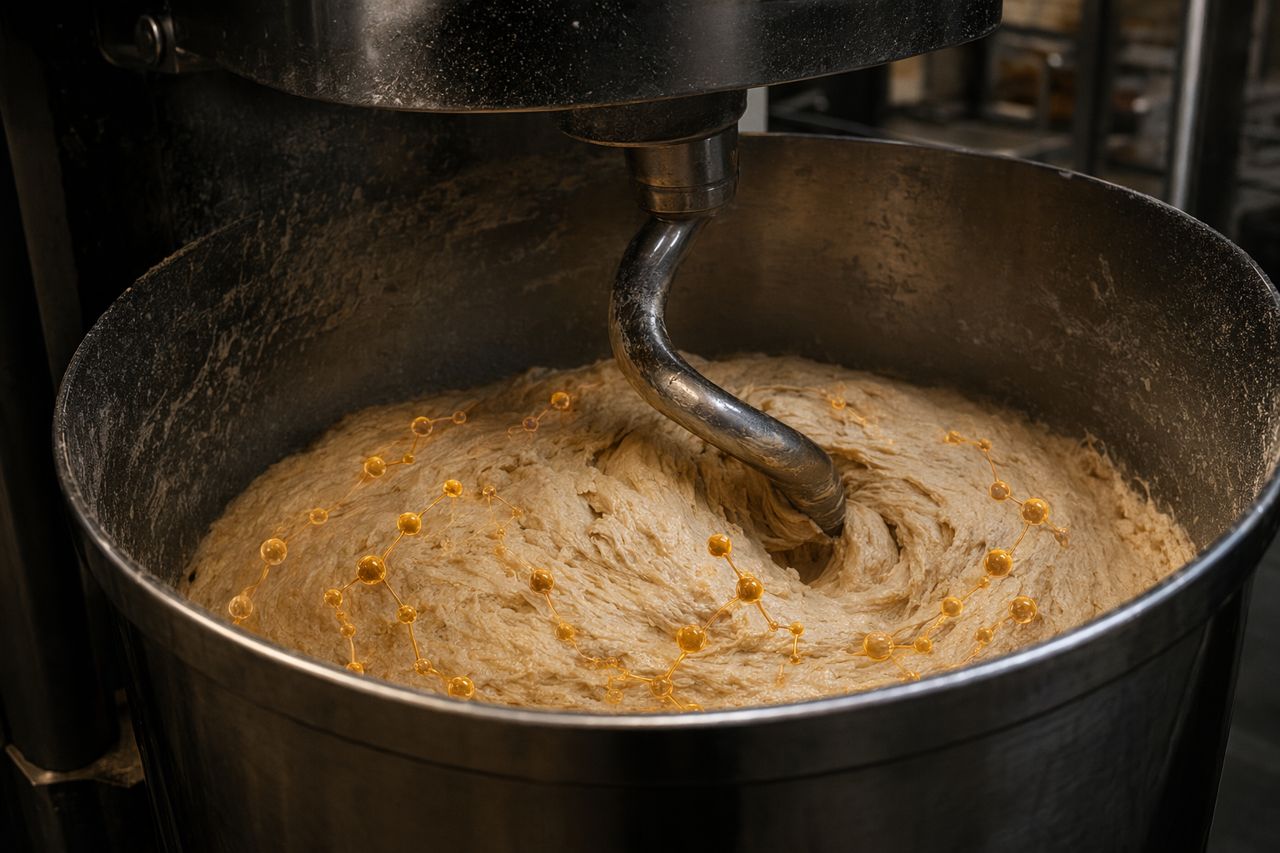
Glucoamylase acts on dextrins generated from starch, releasing glucose step by step. In many bakery formulations, it is used in combination with other functional enzymes—such as alpha-amylase, xylanase, or lipase—depending on the desired outcome.
The key is balance. Too little activity may produce no measurable processing benefit. Too much can increase stickiness, accelerate browning, or shift crumb character beyond specification. Glucoamylase Enzyme Solutions helps buyers define a practical starting range based on flour type, process time, dough temperature, and finished-product targets.
Formulation and process considerations
Flour quality
Damaged starch level, native enzyme activity, ash content, and protein strength all affect enzyme response. Glucoamylase performs best when evaluated against the actual flour streams used in production—not only against a reference flour.
Fermentation time
Longer fermentation and retarded dough systems provide more time for glucose release. Short-time bakery systems may require a different enzyme strategy or a blend approach.
Water absorption and handling
Because glucoamylase changes the soluble sugar profile, it should be assessed alongside dough tack, machinability, divider performance, and sheeting behavior.
Bake profile
Crust color response depends on available reducing sugars, oven temperature, humidity, bake time, and product geometry. Enzyme selection should be validated on the actual line or pilot conditions that represent the commercial process.
Buying criteria for industrial bakery teams
When specifying glucoamylase for flour-based foods, procurement and technical teams should align on more than price per kilogram. Important qualification points include:
- Physical format: powder or liquid, depending on dosing system and plant preference
- Carrier compatibility with existing dry blend or liquid addition points
- Dispersion behavior in flour, premix, or process water
- Regulatory and food-grade documentation for target markets
- Allergen, non-GMO, kosher, halal, and vegetarian suitability where required
- Stability through storage, transport, and normal bakery handling conditions
- Batch-to-batch consistency and supply continuity
- Technical support for line trials and reformulation work
Recommended evaluation pathway
- Define the commercial target: fermentation consistency, bake color, reduced added sugar, improved line tolerance, or a defined combination.
- Select the product format: powder for premix systems or liquid for direct metering.
- Run controlled bake trials using current flour and process conditions.
- Measure practical outputs: proof height, dough handling, oven spring, crust color, crumb character, flavor, and shelf-life observations.
- Confirm process tolerance across flour lots and production shifts.
- Lock specifications only after pilot or plant validation.
Where Glucoamylase Enzyme Solutions fits
Glucoamylase Enzyme Solutions supplies industrial glucoamylase for bakery manufacturers, premix producers, flour improvers, and food ingredient blenders. The focus is not generic enzyme theory. It is practical conversion: starch fragments into fermentable sugar, process variability into tighter control, and technical purchasing into a clearer specification.
If your team is developing a new flour improver, troubleshooting proof inconsistency, or qualifying a glucoamylase for a bakery enzyme system, Glucoamylase Enzyme Solutions can support technical alignment and commercial supply planning.
Request a quote or get pricing
Use the form below to request pricing, documentation, or a technical discussion for bakery-grade glucoamylase.