Glucoamylase for Brewing and High-Attenuation Beer
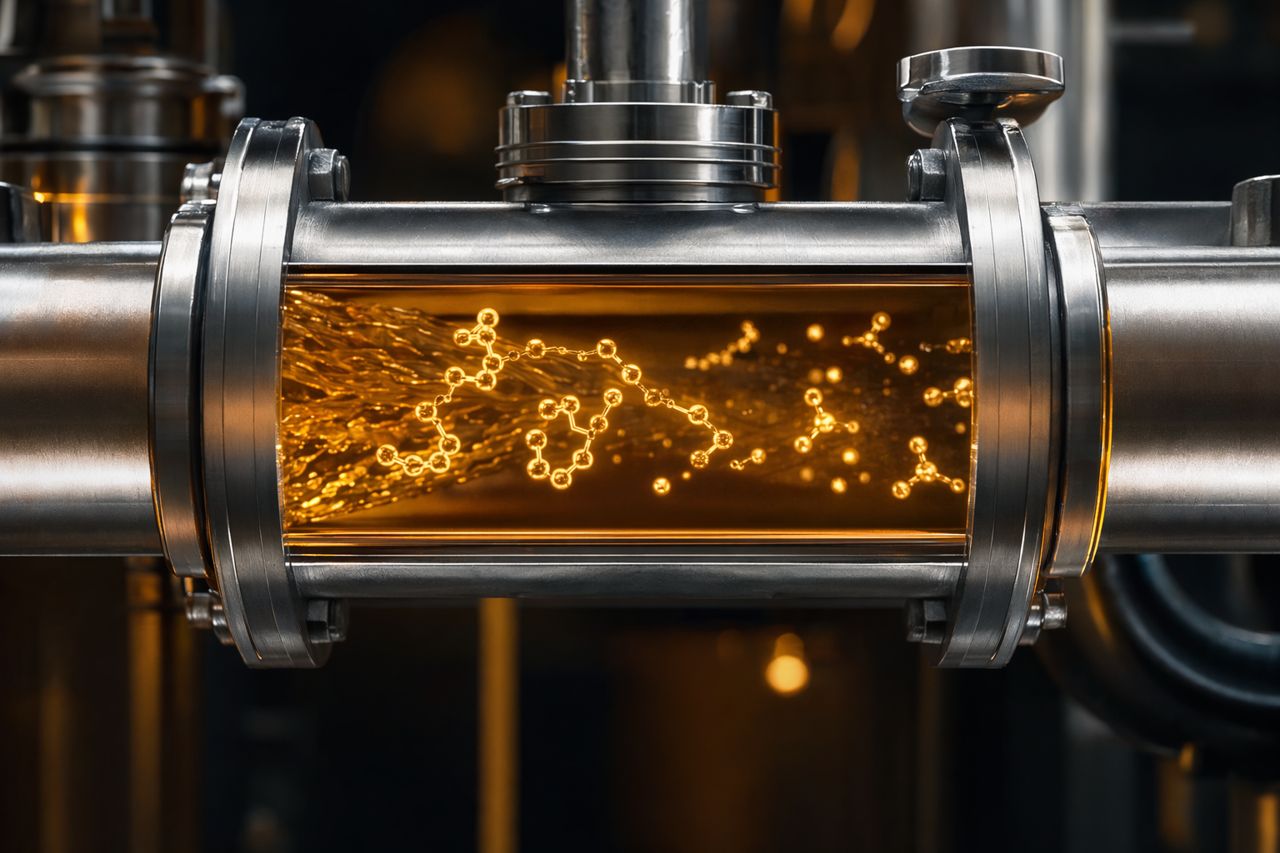
Glucoamylase helps brewers convert residual dextrins into fermentable glucose, supporting higher attenuation, a drier sensory profile, and tighter control of carbohydrate contribution in selected beer programs.
For process teams, the value is practical: more complete fermentable sugar release, improved consistency across mash and fermentation variables, and a clearer route to beer styles where residual sweetness, body, or carbohydrate load must be deliberately reduced.
Where glucoamylase fits in brewing
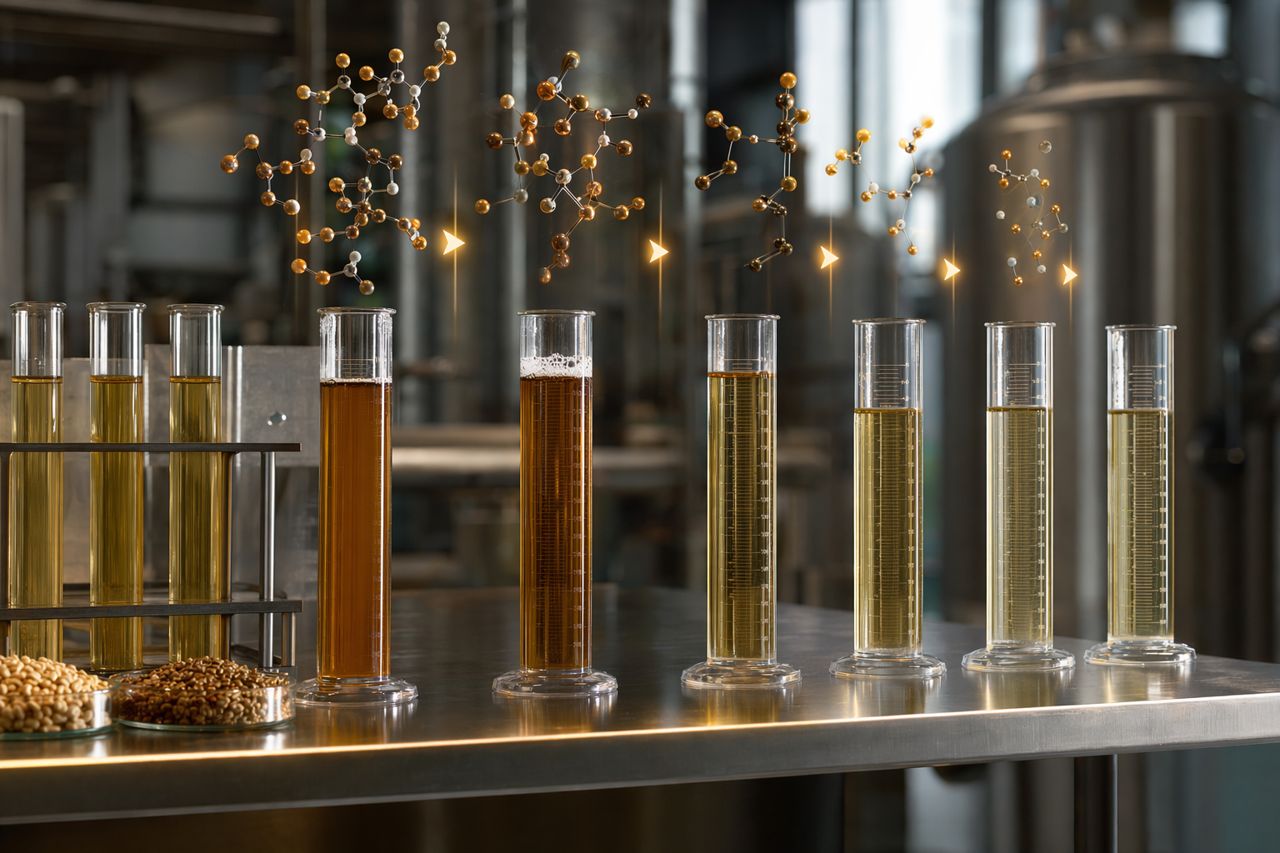
Glucoamylase, also known as amyloglucosidase or glucan 1,4-alpha-glucosidase, works from the non-reducing ends of starch-derived chains and dextrins, releasing glucose that yeast can ferment. In brewing, this makes it useful when native malt enzymes or standard mash profiles leave too much limit dextrin behind.
Common use cases include:
- High-attenuation beer and super-dry lager programs
- Brut-style, dry, or highly fermentable beer recipes
- Low-residual-carbohydrate beer development
- Adjunct-heavy grists where fermentability needs support
- Fermentation strategies targeting lower final gravity
- Consistency improvement when malt or adjunct variability affects fermentable extract
Glucoamylase Enzyme Solutions is intended for commercial brewing teams that need technical flexibility without vague enzyme claims.
Commercial benefits for brewers
Higher attenuation and lower final gravity
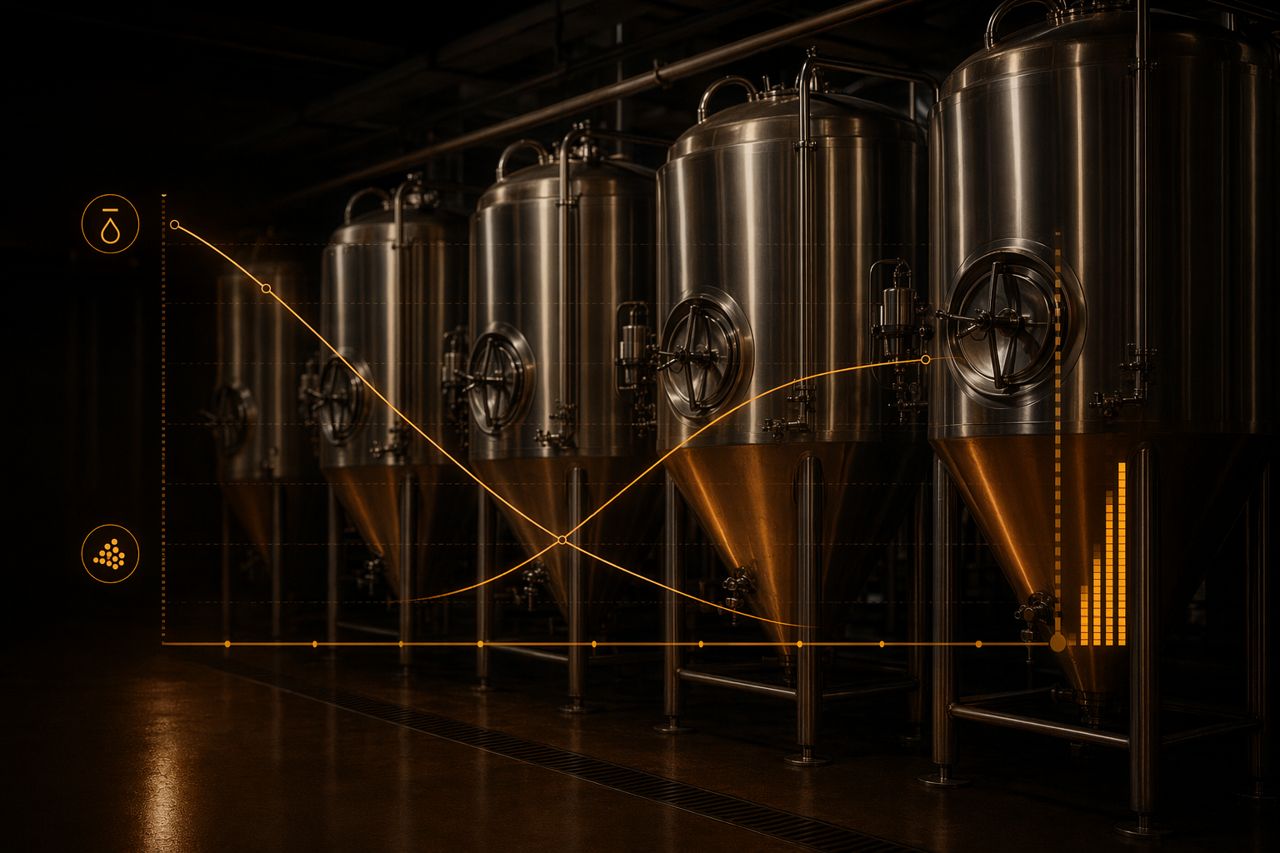
By converting dextrins into glucose, glucoamylase can help yeast ferment a larger share of the available carbohydrate pool. This is especially relevant where a beer specification calls for a dry finish, reduced residual extract, or a tighter final gravity target.
More deliberate carbohydrate management
Glucoamylase gives formulation teams another control point for carbohydrate profile. It does not replace recipe design, mash control, or yeast selection, but it can extend fermentability beyond what standard mashing alone may deliver.

Better consistency across variable raw materials
Malt modification, adjunct quality, grist composition, and mash performance can all affect fermentability. A validated glucoamylase addition strategy can reduce batch-to-batch variation in residual dextrin load and support more predictable attenuation.
Process flexibility
Depending on the selected grade and process design, glucoamylase may be evaluated for addition during mashing, wort handling, or fermentation. The right placement depends on temperature exposure, pH, residence time, yeast strategy, alcohol tolerance, and the target beer profile.
Technical considerations before use
Glucoamylase is powerful. In brewing, that is an advantage only when it is controlled.
Review these points during trials:
- Target beer style: Very dry attenuation is desirable in some beers and damaging in others.
- Addition point: Mash addition and fermentation addition can produce different operational and sensory outcomes.
- Final gravity target: Define the intended endpoint before scaling.
- Body and mouthfeel: Excessive dextrin removal may create a beer that is too thin for the style.
- Yeast performance: Additional glucose can affect fermentation kinetics and attenuation behavior.
- Flavor balance: Dryness changes how bitterness, acidity, alcohol warmth, and aroma are perceived.
- Thermal and pH exposure: Match enzyme grade to the actual process window rather than relying on generic assumptions.
- Inactivation strategy: Confirm whether your process requires heat inactivation or whether downstream conditions are sufficient.
Typical brewing process positions
Mash-stage evaluation
Mash-stage use can support enhanced conversion where brewers want to increase fermentable extract before wort separation. This approach is often evaluated in adjunct-heavy or high-fermentability designs. It requires attention to mash temperature, hold time, pH, and interaction with existing malt enzymes.
Fermentation-stage evaluation
Fermentation-stage use may help reduce residual dextrins after wort production. This can be useful for high-attenuation targets, but it also requires careful monitoring because enzyme activity can continue to affect gravity and dryness during fermentation and conditioning.
Pilot first, then scale
Glucoamylase Enzyme Solutions recommends bench or pilot trials before production adoption. The objective is not simply “more enzyme.” The objective is the correct attenuation curve, finished beer balance, and repeatable process behavior.
What to specify when requesting pricing
To help Glucoamylase Enzyme Solutions recommend the appropriate commercial grade, include:
- Beer style or target product family
- Planned addition point: mash, wort, fermentation, or trial comparison
- Grist composition, including adjunct share if relevant
- Approximate process pH and temperature window
- Target original gravity and final gravity range
- Fermentation time and yeast type
- Desired sensory outcome: dry, crisp, neutral, low-residual, or other
- Packaging format and expected shelf-life requirements
- Any processing constraints, such as no additional heat step or tight filtration requirements
Quality and handling priorities
Glucoamylase is supplied for industrial brewing and beverage production environments where consistency, documentation, and application support matter. Available documentation may include product specification, ingredient status, recommended storage conditions, allergen or dietary statements where applicable, and regional compliance information relevant to the supplied grade.
For procurement teams, Glucoamylase Enzyme Solutions supports quote requests with packaging options, lead time information, and commercial supply discussion. For technical teams, we support application conversations focused on process fit and trial design.
Request a quote or get pricing
Tell us what you are brewing, where you plan to add glucoamylase, and what attenuation target you need to reach. Glucoamylase Enzyme Solutions will respond with grade guidance, pricing, and next-step trial recommendations.
FAQ
Will glucoamylase make every beer better?
No. It is best used when higher attenuation, dryness, or reduced residual dextrin is a defined target. It can reduce body if applied to beers where malt fullness is part of the intended profile.
Can it be used with adjunct brewing?
Yes, glucoamylase is commonly evaluated in processes where adjuncts or starch-derived materials affect fermentability. The full enzyme system should be considered alongside liquefaction, saccharification, mash profile, and yeast selection.
Should it be added in the mash or fermentation?
Both positions can be evaluated, but they produce different control dynamics. Mash addition is often easier to integrate with brewhouse conversion logic, while fermentation addition can extend attenuation after wort production. The best option depends on process constraints and finished beer targets.
Does Glucoamylase Enzyme Solutions provide trial guidance?
Yes. Share your process window and target profile, and Glucoamylase Enzyme Solutions can help structure a practical trial plan for commercial evaluation.