Glucoamylase for bioethanol saccharification
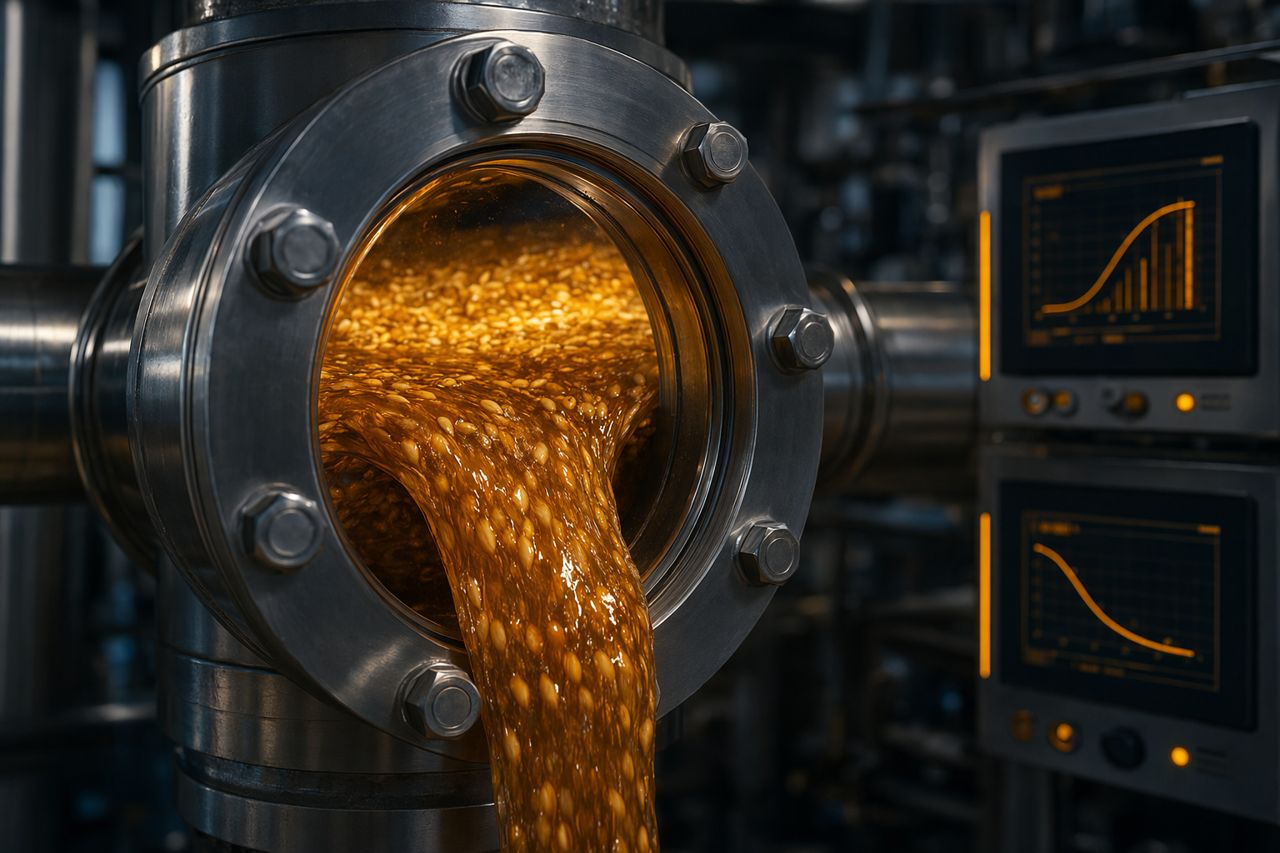
Bioethanol yield depends on how completely starch-derived dextrins are converted into fermentable glucose. Glucoamylase Enzyme Solutions supplies glucoamylase in bulk to fuel-ethanol and industrial-alcohol producers, and to the distributors and resellers who supply them, for starch-to-ethanol processes where corn, cassava, wheat, and other starchy feedstocks must move from liquefaction into predictable fermentation.
Glucoamylase, also known as amyloglucosidase or glucan 1,4-alpha-glucosidase, works downstream of starch liquefaction to break dextrin chains into glucose. In bioethanol plants, that conversion supports stronger fermentable sugar availability, improved substrate utilization, and steadier fermentation performance.
Buying for a plant or for resale? Ethanol-grade glucoamylase is quoted per order; send the feedstock, quantity and destination. Request a quote.
Where Glucoamylase Enzyme Solutions fits in the ethanol process
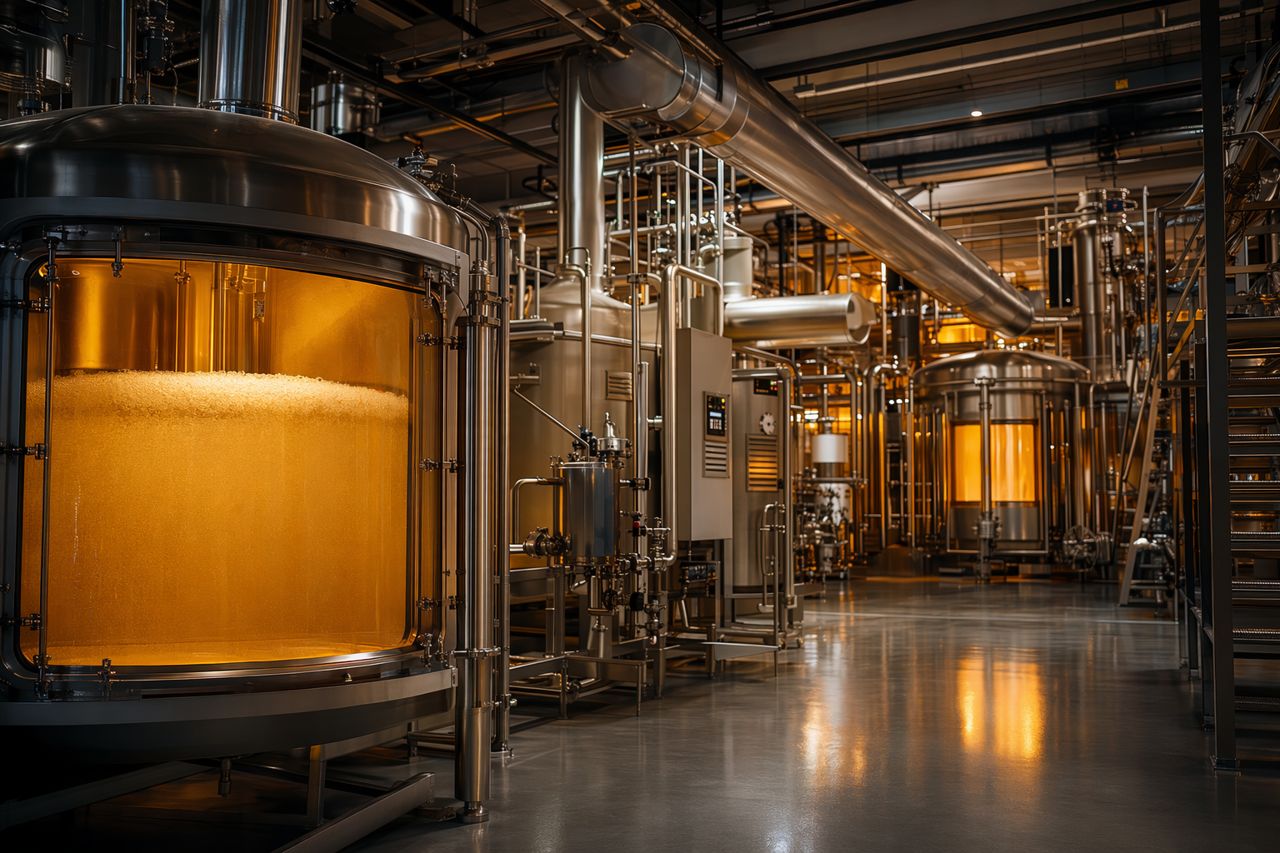
Glucoamylase is used after gelatinization and liquefaction, either during dedicated saccharification or in simultaneous saccharification and fermentation workflows. It is selected around the plant’s feedstock, mash solids, temperature profile, pH window, residence time, yeast system, and upstream alpha-amylase program.
Typical bioethanol use cases include:
- Corn dry-grind ethanol production
- Cassava-based ethanol fermentation
- Wheat and mixed-grain alcohol processes
- Starch slurry saccharification before yeast inoculation
- Simultaneous saccharification and fermentation systems
- Process optimization where residual dextrin reduction is commercially important
Commercial value for ethanol producers
More complete starch conversion
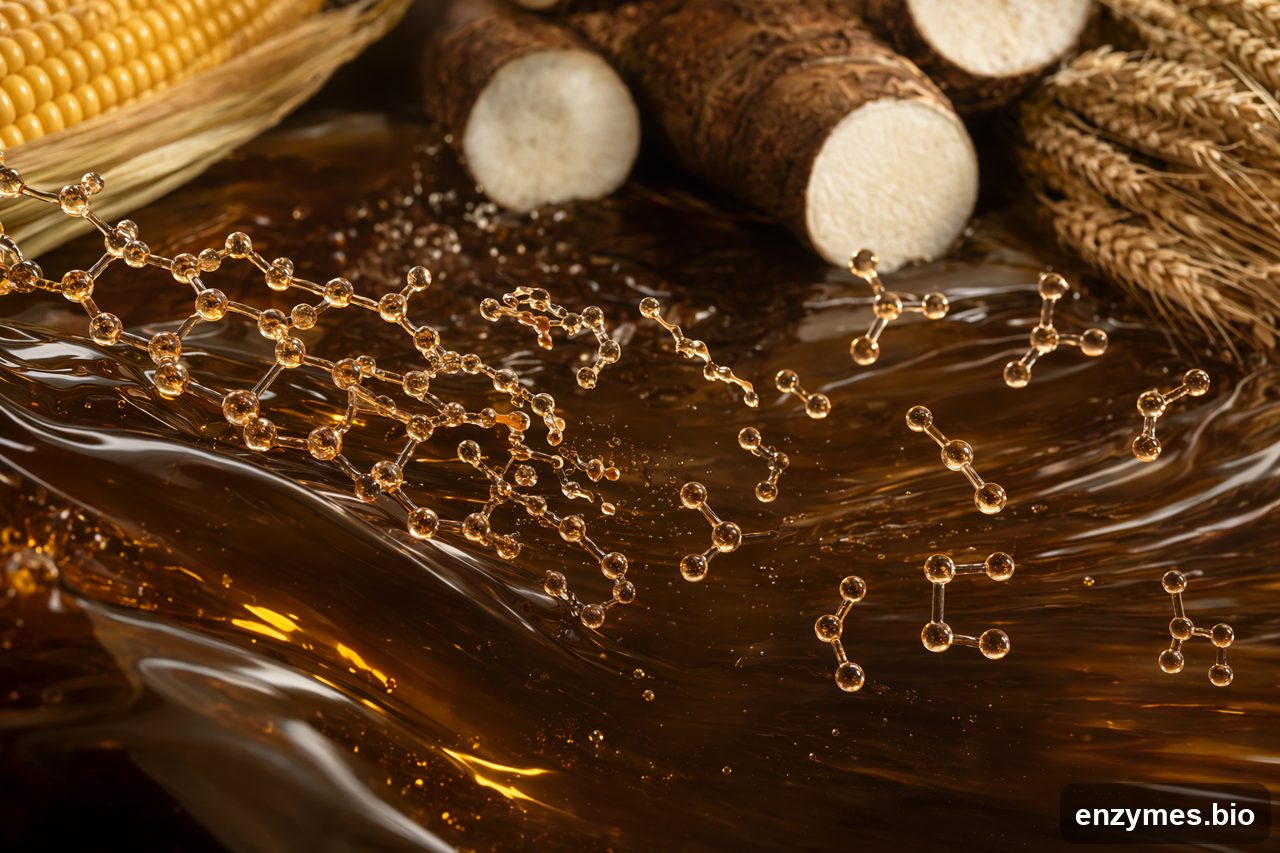
Incomplete dextrin breakdown leaves fermentable potential in the mash. Glucoamylase helps convert liquefied starch fragments into glucose that yeast can use, supporting better raw material utilization and cleaner process economics.
Better fermentation readiness
Consistent glucose release helps fermentation teams manage start-up behavior, substrate availability, and batch-to-batch repeatability. That matters when feedstock quality changes, slurry handling varies, or the plant is pushing throughput.
Viscosity and handling support
As dextrins are further hydrolyzed, mash characteristics can become easier to manage. In practical plant terms, that can support pumping, mixing, heat transfer, and transfer consistency across saccharification and fermentation stages.
Feedstock flexibility
Corn, cassava, wheat, and other starch sources differ in gelatinization behavior, impurity profile, liquefaction response, and residual dextrin structure. Glucoamylase Enzyme Solutions works with buyers to match the enzyme grade to the actual substrate and plant format, not a generic brochure assumption.
Technical considerations before selection
For an accurate recommendation, Glucoamylase Enzyme Solutions reviews the process conditions that determine enzyme performance and commercial fit. Useful qualification details include:
- Feedstock type and starch source
- Liquefaction system and alpha-amylase compatibility requirements
- Saccharification or SSF process design
- Target pH and temperature profile
- Mash solids and viscosity constraints
- Residence time and fermentation schedule
- Yeast strain or fermentation system requirements
- Packaging, storage, and handling preferences
- Documentation, import, and quality requirements
Glucoamylase Enzyme Solutions does not publish trader-confidential assay methods or activity-unit positioning. Instead, we help technical and procurement teams evaluate the right product format against plant conditions, handling requirements, and commercial objectives.
Product formats and supply discussion
Glucoamylase can be discussed for liquid industrial enzyme programs where dosing integration, storage stability, packaging, and plant handling are part of the buying decision. Procurement conversations can include volume planning, lead time expectations, documentation, sample qualification, and recurring supply alignment.
Why ethanol teams specify Glucoamylase Enzyme Solutions
- Application-specific support for starch-based ethanol workflows
- Practical fit for corn, cassava, wheat, and mixed starchy substrates
- Focus on glucose release, process consistency, and fermentable sugar availability
- Commercially grounded qualification for plant-scale use
- Clear supply conversations for procurement and technical teams
Request a wholesale quote
We supply glucoamylase for corn, cassava and grain bioethanol saccharification in bulk to manufacturers, distributors and resellers, on a quote-only basis. To get a recommendation and a price, send: the product or application, the quantity (trial lot, monthly or annual), the destination country, and the process step where the glucoamylase will be used. Format (liquid or powder) and pack size are quoted per order; tell us your preference if you have one.