Glucoamylase for Starch Saccharification
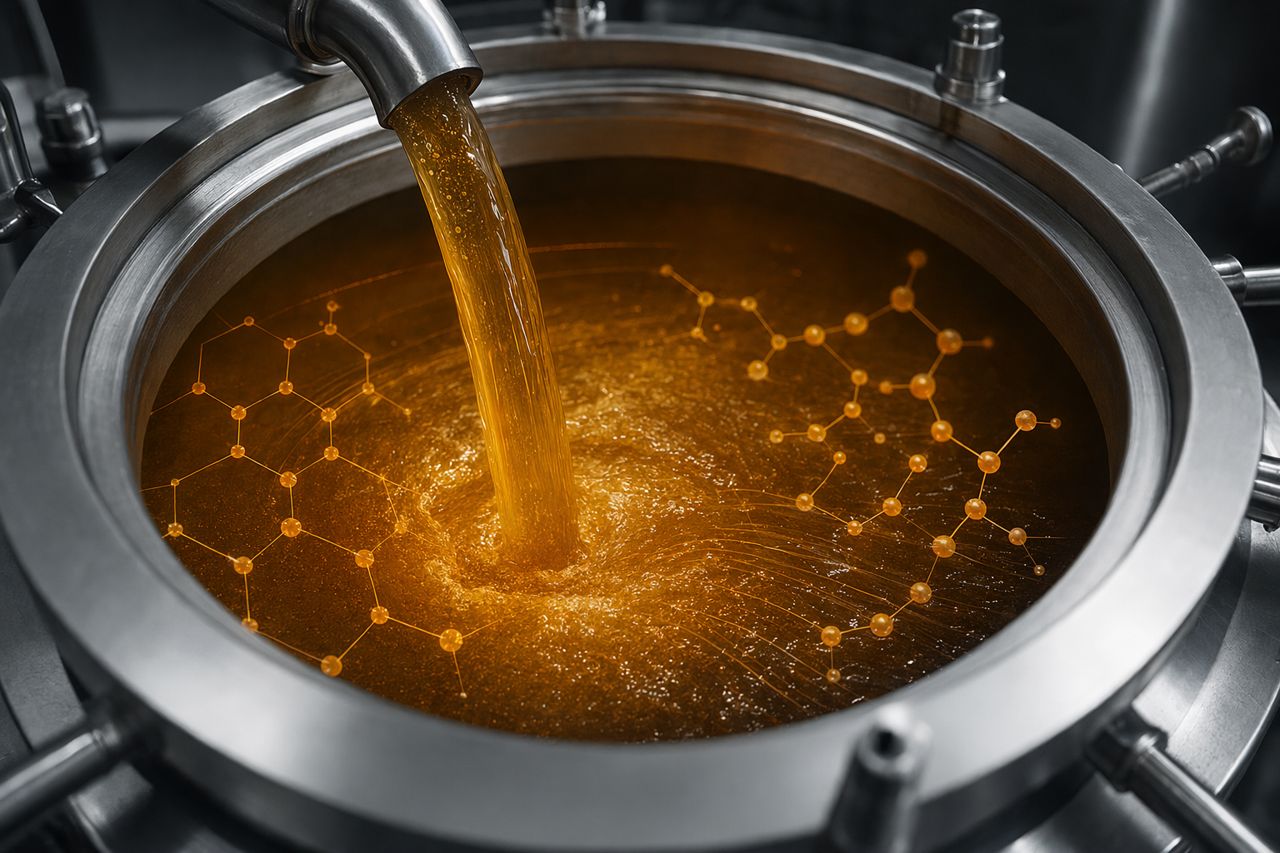
Glucoamylase Enzyme Solutions supplies glucoamylase in bulk to starch processors, sweetener and fermentation manufacturers, and the distributors and resellers who supply them, for converting liquefied starch into glucose-rich streams. Built for saccharification after upstream starch liquefaction, glucoamylase helps release fermentable glucose from dextrins, lowers residual carbohydrate complexity, and supports tighter downstream performance in sweetener and fermentation operations.
Buying for a plant or for resale? Saccharification-grade glucoamylase is quoted per order for manufacturers, distributors and resellers; send the starch source, quantity and destination. Request a quote.
Glucoamylase, also known as amyloglucosidase or glucan 1,4-alpha-glucosidase, works from the non-reducing ends of starch-derived chains. In practical plant terms, it helps turn liquefied starch hydrolysate into a more fermentable, glucose-forward process stream.
Where it fits in the starch line
A typical starch conversion sequence includes gelatinization, liquefaction, saccharification, and downstream refining or fermentation. Glucoamylase is most often applied after liquefaction, when alpha-amylase has already reduced native starch into soluble dextrins.
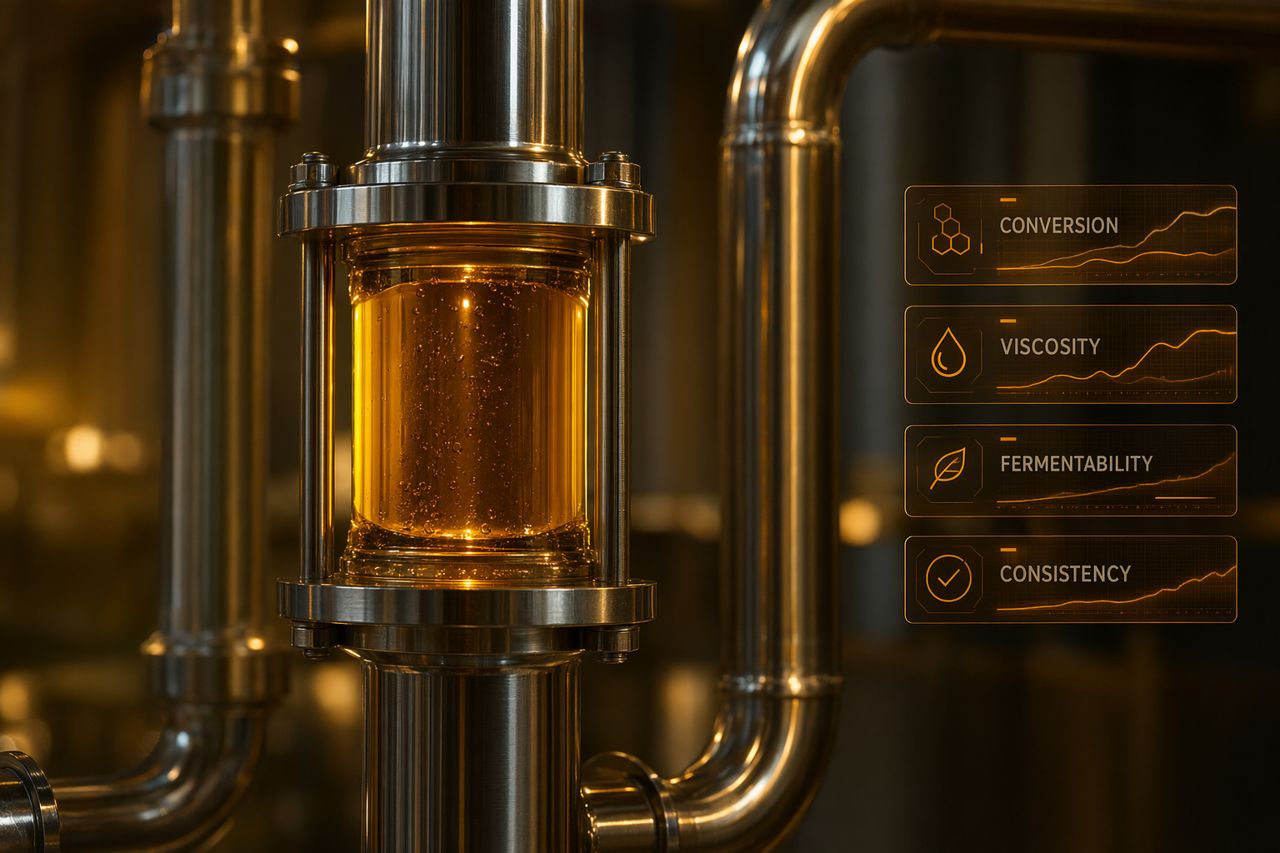
At the saccharification stage, the objective is clear: increase glucose release while maintaining process consistency, manageable viscosity, and a stream profile that supports the next unit operation.
Primary conversion role
- Hydrolyzes starch-derived dextrins toward glucose
- Supports high-glucose syrup production
- Generates fermentable sugar streams for ethanol, organic acids, amino acids, and other bioprocesses
- Reduces residual dextrin load entering downstream steps
- Helps standardize saccharification outcomes across variable starch inputs
Commercial value for processors
Saccharification performance affects more than a lab result. It influences tank residence time, downstream filtration, fermentation kinetics, refining load, and finished-stream consistency.

What buyers and process engineers typically optimize
| Process priority | How glucoamylase supports it |
|---|---|
| Glucose yield | Drives dextrin conversion toward glucose-rich streams |
| Fermentability | Produces sugar profiles suitable for microbial uptake |
| Viscosity management | Helps reduce dextrin complexity after liquefaction |
| Batch consistency | Supports repeatable saccharification across production cycles |
| Downstream efficiency | Can reduce the load carried into filtration, evaporation, refining, or fermentation |
| Procurement control | Enables specification around substrate, process window, format, and supply continuity |
Application areas
Glucose syrup manufacture
For glucose syrup producers, glucoamylase is used to convert liquefied starch into glucose-rich syrup prior to refining and concentration. The goal is a predictable conversion profile that supports product consistency, color control, and manageable downstream processing.
Fermentation feedstock preparation
In fermentation, the enzyme helps generate accessible glucose from starch-based substrates. A cleaner and more fermentable sugar stream can support more stable fermentation behavior, particularly when plants are working with changing raw material quality or tight turnaround schedules.
Integrated starch processing
For processors running both saccharification and downstream value-add steps, glucoamylase selection affects more than conversion alone. It can influence tank utilization, hold-time planning, blending strategy, and how consistently the plant hits target carbohydrate profiles.
Process fit considerations
Glucoamylase Enzyme Solutions works with B2B buyers who need an enzyme matched to actual operating conditions, not generic catalog language. When reviewing glucoamylase for starch saccharification, the key inputs are:
- Starch source: corn, wheat, cassava, potato, rice, or mixed inputs
- Liquefaction profile and dextrin composition
- Saccharification temperature and pH window
- Target glucose level or fermentability objective
- Residence time and tank configuration
- Downstream route: syrup refining, fermentation, evaporation, blending, or further conversion
- Desired supply format, packaging, and order cadence
- Storage conditions and handling constraints at site level

Formulation and handling notes
Glucoamylase performance depends on the full process environment. Substrate accessibility, liquefaction quality, solids content, pH stability, temperature control, mixing, and residence time all affect the final carbohydrate profile.
For formulation specialists and technical buyers, Glucoamylase Enzyme Solutions can support specification discussions around enzyme format, compatibility with existing starch-processing workflows, and supply planning for pilot, scale-up, or recurring production.
Why Glucoamylase Enzyme Solutions
Glucoamylase Enzyme Solutions is built for industrial enzyme buyers who need clear commercial fit and process relevance. Our glucoamylase positioning is practical: define the substrate, confirm the process window, align on the downstream objective, and quote against the required supply pattern.
You get a technical conversation, not inflated claims. The focus is yield, conversion reliability, and plant-level usability.
Request a wholesale quote
We supply glucoamylase for starch saccharification, glucose syrup and fermentation feedstocks in bulk to manufacturers, distributors and resellers, on a quote-only basis. To get a recommendation and a price, send: the product or application, the quantity (trial lot, monthly or annual), the destination country, and the process step where the glucoamylase will be used. Format (liquid or powder) and pack size are quoted per order; tell us your preference if you have one.